✈️ Aviation Glossary – Word of the Week

Updated: Apr 21
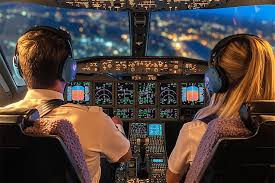
PILOT
Definition:A pilot is a trained professional who operates and controls an aircraft, ensuring the safety of passengers, crew, and cargo.
Why it matters:Pilots are responsible for planning flights, navigating through the air, communicating with air traffic control, and making important decisions before, during, and after a flight.
Fun Fact:Pilots don’t just fly planes — they also train regularly in simulators to practice handling emergencies and new technology.
Cockpit
Definition:The cockpit is the area of an aircraft where the pilots sit and control the plane. It contains all the instruments, controls, and technology needed to fly safely.
Why it matters:From the cockpit, pilots monitor altitude, speed, weather, and navigation while communicating with air traffic control. It’s where critical decisions are made during every flight.
Fun Fact:Modern cockpits use advanced digital screens called “glass cockpits,” replacing many of the traditional dials used in older aircraft.
Runway
Definition: A runway is a specially prepared strip of land at an airport where aircraft take off and land.
Why it matters: The runway’s length, surface, and orientation are crucial for safe takeoffs and landings. Pilots rely on it to control speed, lift, and braking.
Fun Fact: Some runways are long enough to fit multiple football fields end-to-end — the longest in the world is over 18,000 feet!
Air Traffic Control (ATC)
Definition: Air traffic control is a service provided by ground-based controllers who coordinate the movement of aircraft in the sky and on the ground.
Why it matters: ATC ensures planes stay safe distances apart, prevents collisions, and helps pilots navigate busy airspaces.
Fun Fact: Controllers often use radar, radio, and even satellite systems to track hundreds of planes at the same time.
Altimeter
Definition: An altimeter is an instrument in the cockpit that measures an aircraft’s altitude above sea level.
Why it matters: Altitude is critical for safety, navigation, and fuel efficiency. Pilots use the altimeter to maintain proper flight levels and avoid other aircraft.
Fun Fact: Traditional altimeters use air pressure to determine height, while modern ones are often digital and highly precise.
Flight Simulator
Definition: A flight simulator is a machine that replicates the experience of flying an aircraft, used for pilot training and practice.
Why it matters: Simulators allow pilots to practice emergencies, learn new aircraft systems, and gain experience without any real-world risk.
Fun Fact: Some full-motion simulators move in six directions and can mimic turbulence, storms, and engine failures!
Black Box
Definition: The “black box” is a flight recorder on an aircraft that captures all flight data and cockpit conversations.
Why it matters: Black boxes are essential for investigating accidents and understanding exactly what happened during a flight.
Fun Fact: Despite the name, black boxes are actually bright orange so they can be easily found after a crash.
Altimeter
Definition: An altimeter is an instrument in the cockpit that measures an aircraft’s altitude above sea level.
Why it matters: Altitude is critical for safety, navigation, and fuel efficiency. Pilots use the altimeter to maintain proper flight levels and avoid other aircraft.
Fun Fact: Traditional altimeters use air pressure to determine height, while modern ones are often digital and highly precise.
Takeoff
Definition: Takeoff is the phase of flight when an aircraft accelerates along the runway and lifts off into the air.
Why it matters: It is one of the most critical parts of a flight, requiring precise speed, timing, and coordination from the pilots.
Fun Fact: During takeoff, planes reach speeds of around 150–180 miles per hour before leaving the ground!
Preflight
Definition: Preflight is the series of checks and preparations pilots complete before taking off to ensure the aircraft is ready and safe to fly.
Why it matters: During preflight, pilots inspect the plane, review weather conditions, check fuel levels, and plan the flight route. These steps help prevent problems and ensure a safe journey.
Fun Fact: Pilots often walk around the entire aircraft before a flight in what’s called a “preflight inspection” to visually check for any issues.


Comments